Key takeaways
- The corridor's crashes come from changes of speed at interchanges, not from speed itself.
- A twelve-mile-an-hour rear-end hit in a stop-and-go wave still whips the head faster than the neck can brace.
- Belts save lives and do not prevent soft-tissue injury. The exam should cover shoulders, wrists, ribs, and low back too.
- An emergency room visit rules out the dangerous things. It does not replace the follow-up exam and plan.
- The O'Fallon office sits on the west side of the corridor. Say it was a crash when you call.
Interstate 70 enters St. Charles County at the Wentzville interchange, where I-64 ends and US 61 peels north, and it leaves the county on the Blanchette Bridge over the Missouri. In between are roughly twenty miles of the most densely used pavement in the state outside the city. Every road in this desk's masthead feeds it: 364 and 94 at St. Peters and St. Charles, Highway K and Mid Rivers Mall Drive at the retail center of the county, Zumbehl and Fifth Street at the river. The corridor is where the county's commute lives, and so it is where the county's crash pattern lives.
How the corridor makes crashes
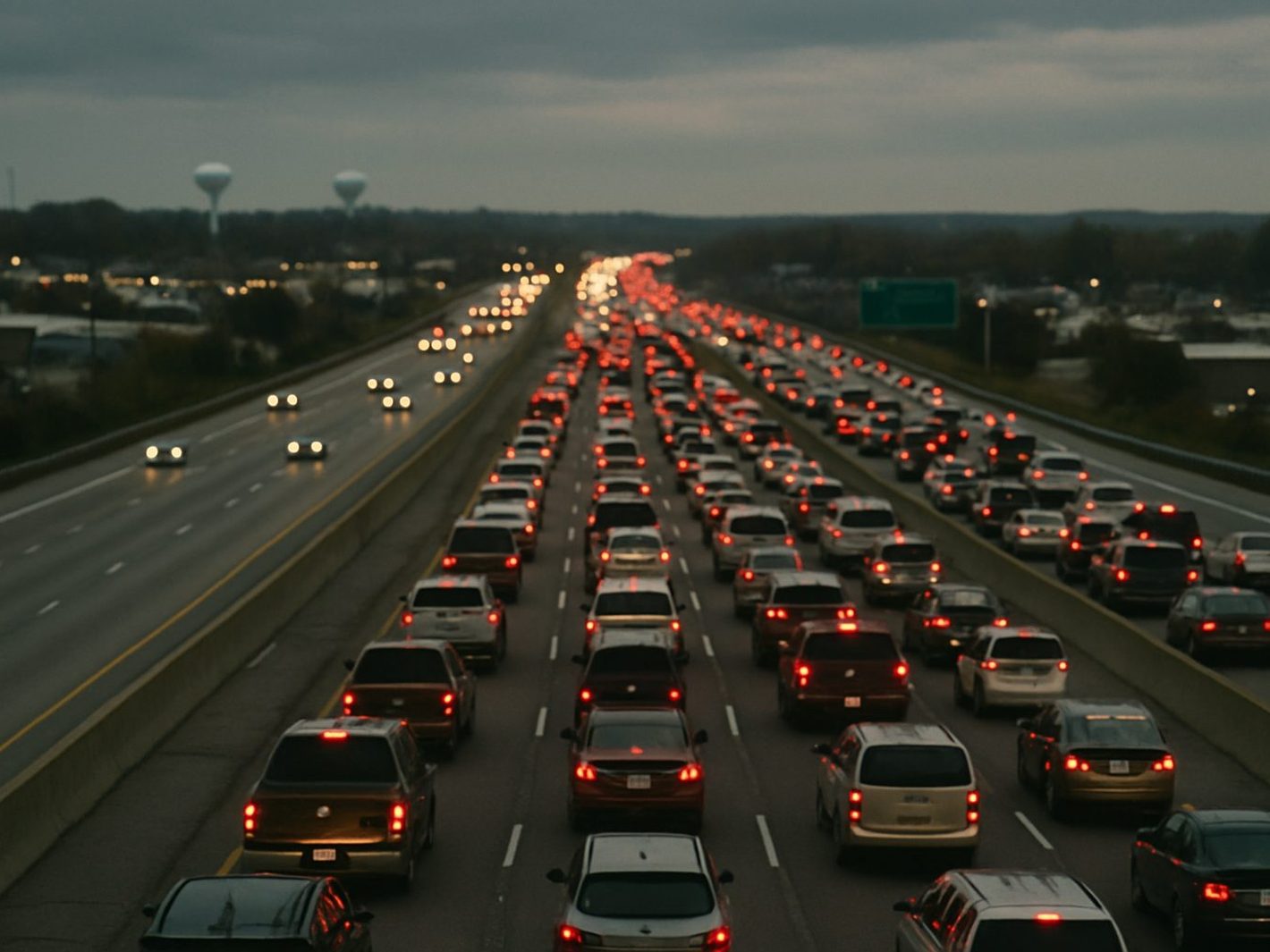
Not speed, mostly. Change of speed. Westbound at five o'clock the interstate runs free to Cave Springs, stacks at Mid Rivers, stacks again at K, and runs free again past Lake St. Louis. Every one of those transitions is a place where the car ahead stops faster than the driver behind expects. Eastbound in the morning the same thing happens in reverse, with the Blanchette Bridge as the wall. Add interchange weaves, the merge from 364, and the work zones that have been a permanent feature of this stretch for years, and you get the county staple: the low-speed rear-end hit.
Rear-end hits at forty miles an hour are dramatic and rare. Rear-end hits at twelve miles an hour in a stop-and-go wave are undramatic and constant. The second kind still whips a head on a neck faster than the muscles can brace, and the second kind is the one where both drivers say they are fine.
The belt, the headrest, and the bracing
The National Highway Traffic Safety Administration is blunt that seat belts are the single most effective way to survive a crash, and this desk will not soften that. NHTSA on seat belts. What a belt does not do is prevent soft-tissue injury. It holds the torso and lets the head move, which is the whole mechanism of whiplash. A headrest set too low or too far back makes it worse. And the driver who sees the hit coming in the mirror and braces, arms locked on the wheel, often gets a sorer shoulder and wrist than the passenger who was looking at a phone.
None of this is a reason for guilt. It is a reason the exam should look at the shoulders, wrists, ribs, and low back, not just the neck. A first visit that asks how your hands were placed and whether you saw it coming is asking the right questions.
What to do the same week
Get examined within the week. The O'Fallon office at 2163 West Terra Lane sits on the west side of the corridor and is a short run from most of it; say on the phone that it was a crash and when. The visit is a history, an movement and symptom examination, findings explained, and a written treatment plan before you leave. If your head hit the headrest or the window, or if you have fog, headache, or screen trouble, say so: the clinic's TBI and concussion lane is a separate lane with its own named tools. Getting seen has the checklist.
If you were examined in an emergency department first, that was the right call if anything on the bright line was present, and it does not replace the follow-up. Emergency rooms rule out the dangerous things. They do not write a treatment plan for a strained neck. Bring the discharge papers to the first visit.
The Blanchette Bridge and the county line
The bridge is the one spot where the corridor has no shoulder worth the name and no exit for miles. A crash on it is a crash in a line of traffic that cannot move. If you are able, get the car off the bridge before trading information; if you are not, stay belted and wait for help. Either way, the crash report will place you in St. Charles County or St. Louis County depending on where you stopped, and that does not change where you get examined. O'Fallon, Hazelwood, or Tesson Ferry: pick the one you can drive to this week.
What the desk hears about 70
The same stories, which is the point. A nurse rear-ended at Cave Springs who felt nothing until the next shift. A contractor hit at the 364 merge who drove to the job and could not lift his arm by noon. A teenager in a first car, tapped at K, who told her parents it was nothing and spent a month with headaches nobody connected to the tap. Those stories are composites and illustrations, not patients of anyone, and the Ledger does not print case histories. It prints the pattern, and the pattern is always the same: the crash was minor, the entry posted late, and the exam was the thing that should have happened first.
Chest pain, a sudden severe headache, weakness or numbness on one side, trouble speaking, a loss of bowel or bladder control, or a head injury with vomiting or worsening confusion is an emergency room trip right now, not a call to a clinic. Everything else on this page is for the crash that did not do that, which is most of them.
The one entry that matters
Get examined this week at the O'Fallon office
Say it was a crash when you call. The office is at 2163 West Terra Lane, O'Fallon. Closed daily 12 to 2.
This entry is educational and is not medical advice or a diagnosis. It is not legal advice. Only an examination by a licensed clinician can tell you what is going on with your neck, your back, or your head.