Key takeaways
- Whiplash is a motion, not a speed. Bumpers absorb a low-speed hit; necks do not.
- The low-speed crash is dangerous for the ledger because it gets no entry at all.
- Side impacts from left turns load the neck sideways and can put the head into the window.
- A real crash earns an exam whether or not the bumper agrees. A clean exam is short.
- The O'Fallon office is minutes from Highway K. Say it was a crash when you call.
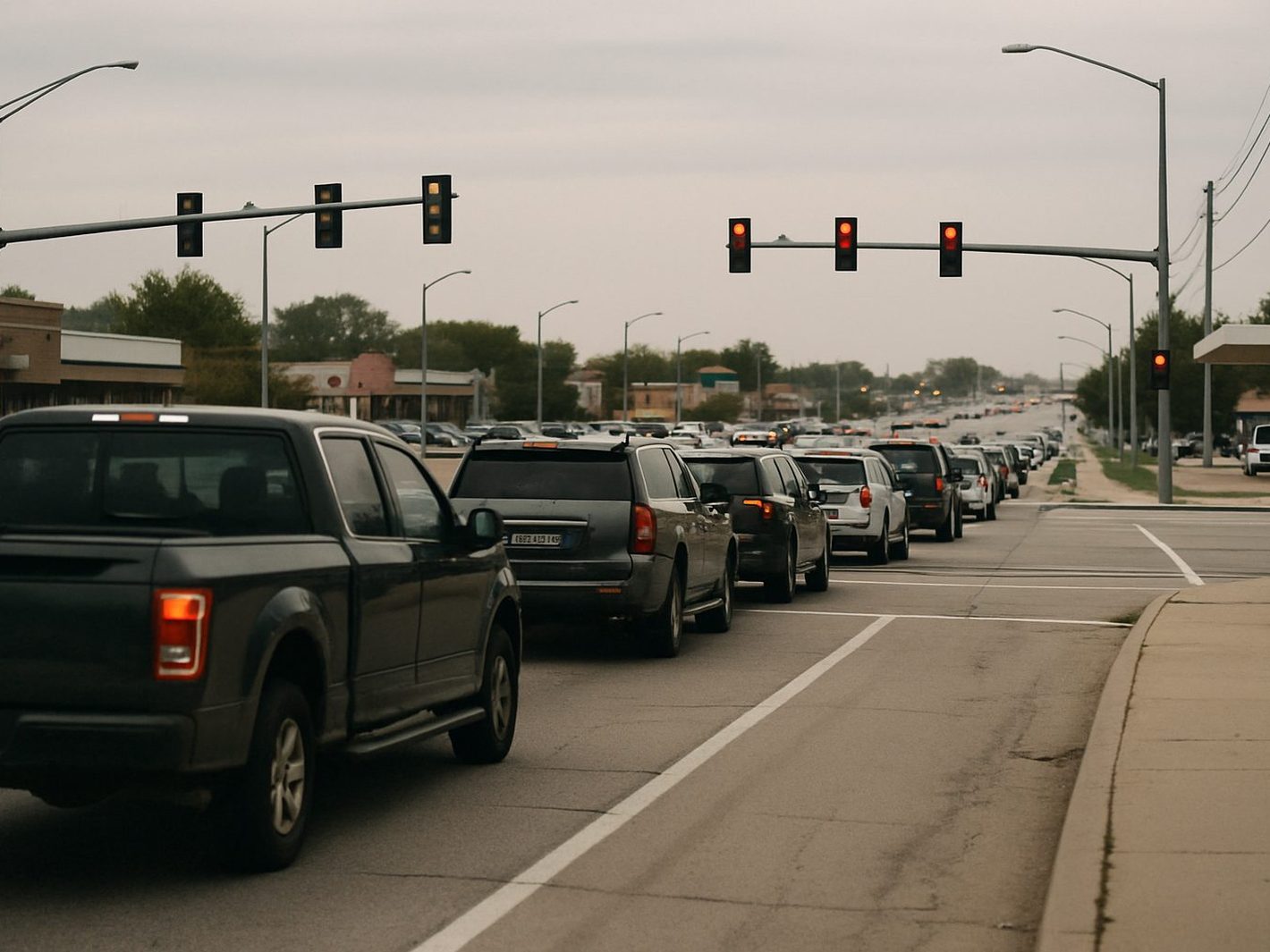
Highway K between I-70 and Route N is not a highway. It is a retail main street with six lanes, a dozen signals, and left-turn bays that fill faster than they empty. Mid Rivers Mall Drive in St. Peters is the same animal. So is Highway 94 where it runs through St. Charles. At five o'clock these roads do what arterials do: they stop, start, and stop again, and every cycle is a chance for the driver behind to look at the light instead of the bumper. This is the arterial crash, and it is the one county readers most often decide not to get examined for.
Anatomy of a parking-lot-speed crash
A light goes yellow. The first car stops. The second car, doing twenty, stops late and taps the first. Nobody's airbag fires. The bumpers look fine or nearly fine. Both drivers get out, both say they are fine, one of them says "no harm done," and a photo of two license plates is the only record the crash ever gets.
Here is what the physics says about that tap. Whiplash is a motion, not a speed. The head of the front driver, relaxed and looking at the light, is thrown back and then forward in a fraction of a second, faster than the neck muscles can brace. The National Institute of Neurological Disorders and Stroke lists neck pain and stiffness, headache, dizziness, and shoulder or back pain among the results, and notes symptoms can take time to appear. NINDS on whiplash. Bumpers are designed to shrug off a low-speed hit. Necks are not.
Why the low-speed crash is the dangerous one for the ledger
Not because it hurts more. Because it gets no entry. The forty-mile-an-hour crash sends people to an emergency room and produces paperwork on its own. The Highway K tap produces a shrug. Then the second morning arrives, the neck is half a turn short, and the person who shrugged has to decide whether it is worth a call. By the time they decide, it is a week later, and a week matters for the neck and for the paper. Feeling fine is an entry too says the rest of that.
The Ledger's rule is that a real crash earns an exam whether or not the bumper agrees. A clean exam is short. It closes the question. And if something did happen in that fraction of a second, the findings are on a dated page instead of in a memory.
The county's arterials, in order of what the desk hears
- Highway K from I-70 south through O'Fallon to Cottleville. Signals, retail driveways, and the I-70 ramp stack.
- Mid Rivers Mall Drive in St. Peters, the mall loop and the I-70 interchange.
- Highway 94 through St. Charles and St. Peters, a main street that still thinks it is a state route.
- Zumbehl Road and Fifth Street feeding the Blanchette Bridge.
- Route 364's ramps where highway speed meets the first signal.
The list is from what the desk hears, not a statistic; the Ledger does not print crash counts it cannot source. The pattern is the point: stop-and-go, low speed, rear-end or side impact, everybody fine on the shoulder.
The same-week entry
The O'Fallon office at 2163 West Terra Lane is minutes from Highway K. Call (636) 280-0990, say it was a crash and when, and say where it hurts today even if the answer is "a little." The published hours are Monday, Tuesday, and Thursday 9 to 6 with Wednesday and Friday by appointment, and the office closes from 12 to 2. The visit is a history, an exam, findings explained, and a written plan. If the findings say imaging or a different specialty, the honest answer is to say so.
The bright line applies here as everywhere. Chest pain, a sudden severe headache, weakness or numbness on one side, trouble speaking, a loss of bowel or bladder control, or a head injury with vomiting or worsening confusion is an emergency room trip right now, not a call to a clinic. A Highway K tap almost never crosses that line. When it does, nothing else on this page matters.
The one entry that matters
Get examined this week at the O'Fallon office
Say it was a crash when you call. The office is at 2163 West Terra Lane, O'Fallon. Closed daily 12 to 2.
This entry is educational and is not medical advice or a diagnosis. It is not legal advice. Only an examination by a licensed clinician can tell you what is going on with your neck, your back, or your head.