Key takeaways
- The O'Fallon office: 2163 West Terra Lane, (636) 280-0990. Mon, Tue, Thu 9 to 6; Wed and Fri by appointment; closed 12 to 2.
- Say it was a crash and when. Those two facts move you onto the schedule.
- Bring insurance information, what you know about the collision, and any paperwork you already hold.
- The visit is a history, an exam, findings explained, and a written plan. Ask the four questions.
- If the exam says emergency room or a different specialty, that is the system working.
Getting seen after a crash in St. Charles County is one phone call. That sentence is the whole entry, and the rest of this page exists because people make the call harder than it is. They wait for a worse day. They are not sure a chiropractic injury clinic is the right office. They do not know what to bring, or what to say, or whether "I feel mostly fine" disqualifies them. None of those are reasons. Here is what the call and the visit actually are.
The near office
For St. Charles, St. Peters, Cottleville, Dardenne Prairie, Wentzville, Lake St. Louis, and O'Fallon, the natural call is the O'Fallon office: 2163 West Terra Lane, O'Fallon, MO 63366, phone (636) 280-0990. It is off I-70 on the west side of the county, which means it is minutes from most of the county's crash corridors and a single interstate run from the rest.
The published hours are Monday, Tuesday, and Thursday 9am to 6pm, with Wednesday and Friday by appointment, and the office is closed every day from 12 to 2. Read that twice: if your schedule only breathes on a Wednesday or a Friday, call and ask rather than assuming the door is shut. And do not drive over at 12:30 expecting to be seen. Offices and hours has all three offices laid out, including Hazelwood and Tesson Ferry across the river.
What to say on the phone
Say it was a crash, and say when. Those two facts tell the office what kind of visit to book. Then say where it hurts today, in plain words, even if the answer is "stiff neck, headache, not terrible." If your head hit something, or if you have fog or trouble with screens, say that too, because the clinic publishes a separate TBI and concussion lane and the office should know which lane you belong in.
If the call is for someone else, the useful handoff is small: their name, a number that actually reaches them, one sentence on what happened and when, where it hurts today, and which office is the shorter drive. Tell the injured person what you told the clinic. A handoff they did not hear about is not a handoff.
What to bring
- Your insurance information. Ask the clinic directly how a visit is billed and what they accept. This desk does not publish payment terms for a clinic it does not own.
- What you know about the collision: date, road, roughly how it happened, whether you were the front car or the back car, whether the airbag fired.
- Any paperwork you already have: a crash report number, the other driver's information, discharge papers if you went to an emergency room first.
- A list of medications you take and any prior neck, back, or head injuries. The exam is better when the history is honest.
- If you already have an attorney, bring their contact so records can be sent where they need to go. If you do not, you do not need one to be examined. You do not need to have decided anything about a claim before you get examined.
What the first visit actually is
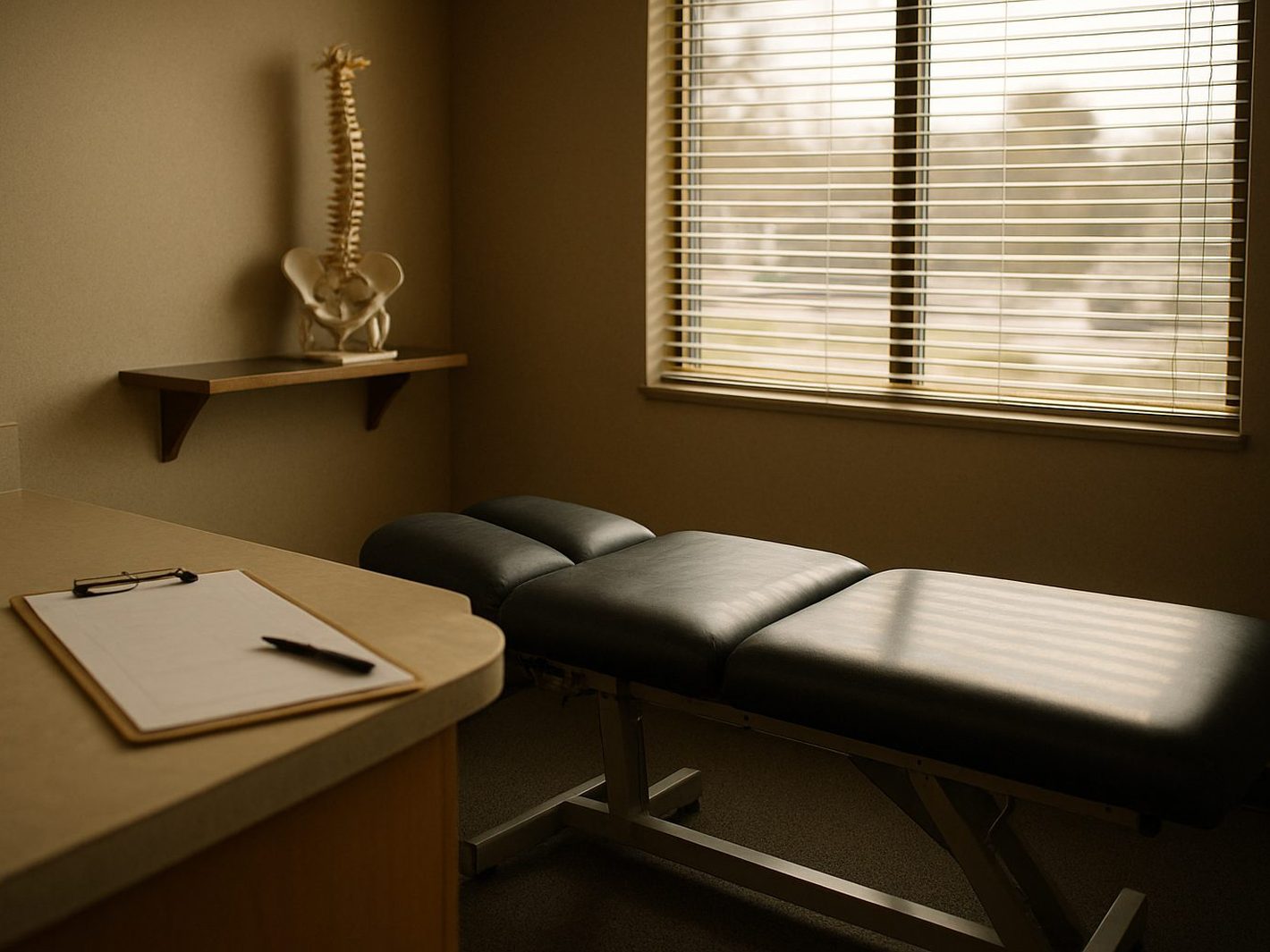
A history of the crash, told in your words. A physical examination: orthopedic tests of the neck, back, and shoulders, neurological checks of strength, sensation, and reflexes, and the specific questions that screen for a head injury. A diagnosis if the findings support one. A written treatment plan you can repeat out loud. And a straight answer about whether this is the right office, or whether you need imaging, a referral, or a different specialty.
That last part matters. An injury clinic is built for planned care. If the exam turns up something that belongs in an emergency department or with a different specialist, being sent there is not a wasted trip. It is the exam doing its job.
If your head took the hit
Concussion after a crash does not require losing consciousness. Headache, fog, screen intolerance, balance trouble, sound sensitivity, and a short temper all qualify for evaluation. Missouri Injury Clinic's TBI lane names its tools on its own site: vagus nerve stimulation at the tragus, neurofeedback, Alpha Stim, sensory motor integration, exercise with oxygen, oculomotor rehabilitation, and cognitive rehabilitation software. Say "head" on the phone and the office will know where to start. The quiet concussion covers what to watch for.
The bright line
Chest pain, a sudden severe headache, weakness or numbness on one side, trouble speaking, a loss of bowel or bladder control, or a head injury with vomiting or worsening confusion is an emergency room trip right now, not a call to a clinic. Call 911. Nothing on this desk is meant to slow that down, and a clinic is the wrong first stop for any of it.
Short of that line, the rule is simpler than people make it. A real crash, any symptom or none, a week or less since it happened: call the office. A clean exam after a real crash is a good entry to have on the books, and it is a short one.
The one entry that matters
Get examined this week at the O'Fallon office
Say it was a crash when you call. The office is at 2163 West Terra Lane, O'Fallon. Closed daily 12 to 2.
This entry is educational and is not medical advice or a diagnosis. It is not legal advice. Only an examination by a licensed clinician can tell you what is going on with your neck, your back, or your head.