Key takeaways
- Adrenaline turns pain down at the scene. It is useless for judging whether you are hurt.
- Soft-tissue strain peaks on day two or three. The lag is how the injury works, not a sign it was imagined.
- A clean exam closes the question and gives any later symptom a baseline.
- The record opened in week one connects the injury to the event. Week three connects it to a timeline.
- If you already waited, go anyway. A later exam is still a real exam.
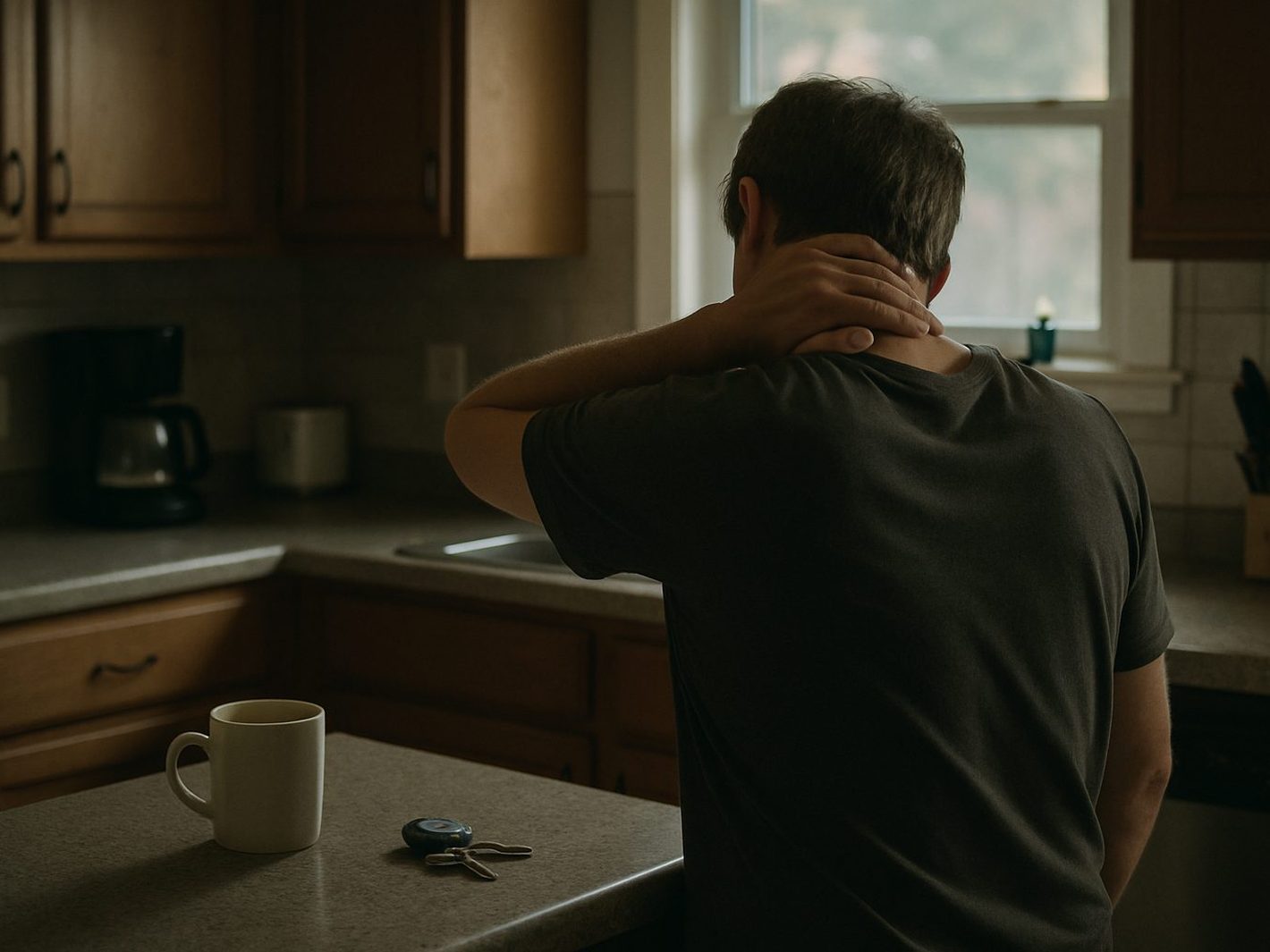
The most common sentence spoken on a St. Charles County shoulder after a crash is "I'm fine." It is almost always sincere, and it is almost never a finding. This entry is about the gap between the two: why soft-tissue pain posts late, what adrenaline is doing to your judgment at the scene, and why the Ledger treats a clean exam after a real crash as a good line to have on the books rather than a wasted afternoon.
What adrenaline does at the scene
A crash is a threat, and the body responds to threats the old way. Heart rate up, pupils wide, pain signals turned down so that you can get the car off the road and deal with the other driver. That is useful for the next thirty minutes. It is useless for deciding whether your neck is injured, because the whole point of the response is to keep you from noticing. People walk on broken ankles at crash scenes. A strained neck does not stand a chance of getting your attention.
The response fades over hours. Then the second process starts.
Why soft tissue posts late
Muscle, tendon, and ligament strain does not hurt most at the moment of injury. It hurts most when the inflammatory response peaks, and that takes time: swelling, stiffness, and pain build through the first day and usually top out on the second or third. That is why "slept fine, woke up unable to turn my head" is the standard story, and why the National Institute of Neurological Disorders and Stroke notes that whiplash symptoms may be delayed. NINDS on whiplash. The timeline is not a sign that the injury was imagined. It is how the injury works.
The same lag applies to the low back, which took the belt and the seat, and to the shoulders and wrists of a driver who braced on the wheel. And head symptoms can lag too, which is why the quiet concussion has its own entry.
What a clean exam is worth
Say you go, and the findings are unremarkable. The neck moves, the neurological checks are normal, nothing on the orthopedic tests lights up. That is not a wasted visit. It is a dated entry that says: examined on this date, after this crash, these findings. If you stay fine, it closes the question instead of leaving it open all autumn. If something posts late anyway, the second visit has a baseline to compare against, which is the difference between "it got worse" and "it got worse than this specific measurement."
And the lawful sentence applies to a clean exam as much as to a bad one: if a claim is ever part of your story, the dated record from the first exam is what everyone will ask for. A documented exam this week protects your health and your options. You do not need to have decided anything about a claim before you get examined.
The cost of waiting, in plain terms
Three things happen when a county reader waits to see how it develops. The neck stiffens into a pattern the muscles start to protect, which is slower to treat. The head symptoms, if any, go unmanaged during the window when rest matters most. And the eventual record opens in week three instead of week one, connecting the injury to a timeline instead of to an event. None of those is catastrophic. All of them are avoidable with one phone call.
If you already waited, go anyway. A later exam is still a real exam, and being honest about the timeline is part of the record.
Who says "I'm fine" most
From what the desk hears: the parent who has children in the back seat and is focused on them. The worker with a shift in an hour. The teenager in a first car who does not want to make a thing of it. The older driver who does not want to be a bother. Each of them is a reasonable person making a reasonable-sounding decision in the thirty minutes when their body is lying to them. The Ledger's job is to be the voice on the second morning that says the call is not making a thing of it.
Making the call
The O'Fallon office at 2163 West Terra Lane, (636) 280-0990, is the county's office. Monday, Tuesday, and Thursday 9 to 6; Wednesday and Friday by appointment; closed 12 to 2. Say it was a crash and when. Bring your insurance information and what you know about the collision. The visit is a history, an exam, findings explained, and a written plan. Getting seen has the full checklist.
And the line that outranks all of it: Chest pain, a sudden severe headache, weakness or numbness on one side, trouble speaking, a loss of bowel or bladder control, or a head injury with vomiting or worsening confusion is an emergency room trip right now, not a call to a clinic.
The one entry that matters
Get examined this week at the O'Fallon office
Say it was a crash when you call. The office is at 2163 West Terra Lane, O'Fallon. Closed daily 12 to 2.
This entry is educational and is not medical advice or a diagnosis. It is not legal advice. Only an examination by a licensed clinician can tell you what is going on with your neck, your back, or your head.